Launching Too Soon: The Hidden Cost of Premature Token Distribution in Web3
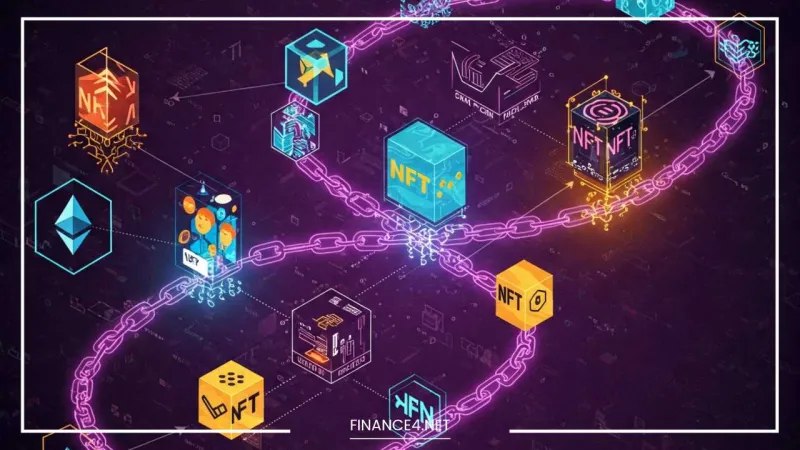
Photo: blockchain token launch community strategy digital network, via www.finance4.net
There is a persistent myth in the Web3 ecosystem that a token launch is the moment a project becomes real. Founders spend months architecting tokenomics, negotiating exchange listings, and drafting whitepapers — then release into a vacuum of genuine community engagement and wonder why the price collapses within 72 hours. The launch was not the problem. The timing was.
For blockchain founders navigating the US market, where institutional scrutiny is intensifying and retail sentiment is increasingly cautious post-2022, the margin for error on a token launch has narrowed considerably. What follows is a rigorous examination of why most distribution events fail before they begin — and what a strategically timed alternative looks like.
The Illusion of Readiness
Most founders conflate product readiness with community readiness. These are not the same thing. A functional protocol with a clean codebase can still face catastrophic distribution failure if the surrounding community lacks depth, conviction, and internal culture.
Consider the pattern observed across dozens of DeFi and infrastructure launches between 2021 and 2024: projects with technically sound products rushed to listing after accumulating Twitter followers and Discord members who had no substantive relationship with the protocol. The token launched. Bots and mercenary capital absorbed the initial supply. Retail entered late, at elevated prices. The team, unable to sustain artificial momentum, watched liquidity evaporate.
The followers were real. The community was not.
Community, in the context that matters for token distribution, means something specific: a group of participants who have demonstrated repeated, voluntary engagement with your product or mission before any financial incentive existed. It means users who tested your testnet without a points program, contributors who submitted pull requests without a grant attached, and advocates who explained your value proposition to others without a referral bounty.
That kind of community takes longer to build. It is also the only kind that sustains a token launch.
Diagnosing the Rush
Why do founders consistently launch too early? Three structural pressures account for the majority of premature distributions.
Investor timelines. Early-stage Web3 investors, particularly those operating on two-to-three-year fund cycles, apply pressure — sometimes subtle, sometimes explicit — to reach a liquidity event. A token launch represents that event. Founders who have raised pre-seed or seed capital often find themselves in a position where the incentive to launch is external, not organic.
Competitive anxiety. The Web3 space rewards perceived momentum. When a competitor announces a launch, founders in adjacent categories frequently accelerate their own timelines in response. This is almost always a mistake. Launching reactively means launching without the community density that makes a distribution defensible.
Confusing marketing metrics for community depth. Discord member counts, Twitter impressions, and waitlist signups are vanity metrics when evaluated in isolation. They measure reach, not relationship. A project with 200,000 Discord members and a 2% message engagement rate is in a structurally weaker position than one with 8,000 members and active daily governance discussions.
A Framework for Calculating Your Launch Window
Rather than launching on a fixed calendar date or in response to external pressure, founders should evaluate distribution readiness against a set of qualitative and quantitative benchmarks.
Engagement velocity, not volume. Track the ratio of active participants to total community members over a rolling 30-day window. A healthy pre-launch community should show at minimum 15 to 20 percent weekly active engagement. If that number is declining, a launch will not reverse the trend — it will accelerate it.
Organic advocacy rate. Monitor how frequently your product is mentioned in conversations your team did not initiate. Set up keyword alerts across Reddit, X (formerly Twitter), and niche forums relevant to your vertical. If you are the primary source of your own narrative, the community is not yet self-sustaining.
Governance participation proxies. Even before a token exists, you can introduce lightweight governance mechanisms — snapshot polls, forum proposals, community calls with voting. Projects that see consistent participation in these structures have demonstrated that their community will engage with on-chain governance post-launch. Projects that see low turnout on these pre-launch signals should delay distribution until that changes.
Retention over acquisition. Measure how many users who engaged with your protocol in month one are still engaging in month three. Retention rates above 40 percent indicate genuine product-market fit. Below 25 percent, you are refilling a leaky bucket — and a token launch will not patch the hole.
Staging Community Growth Before You Go Live
The founders who execute successful token launches tend to treat the pre-launch period as a structured program rather than an unstructured waiting room. The following staging approach has emerged as a reliable playbook across successful US-based Web3 projects.
Phase one: Closed contributor cohorts. Before any public announcement, identify 50 to 100 individuals who represent your ideal community member. These may be developers, researchers, domain experts, or sophisticated users. Bring them into a private environment, give them early access, and create structured feedback loops. This group becomes the cultural foundation of your community before it scales.
Phase two: Public testnet with friction. Resist the temptation to make testnet participation frictionless. Require users to complete meaningful tasks — submitting bug reports, participating in simulated governance, writing documentation. Friction filters for commitment. The users who complete friction-bearing tasks are the ones who will remain after the launch incentives normalize.
Phase three: Progressive disclosure of tokenomics. Share your distribution model with your community incrementally and invite critique. Projects that publish tokenomics and treat community feedback as a formality miss an opportunity to build ownership. Projects that genuinely iterate on distribution mechanics based on community input arrive at launch with a constituency that feels invested in the outcome.
Phase four: Soft launch with restricted access. Consider a restricted initial distribution — whether through a points-to-token conversion, a merit-based allocation, or a staggered vesting schedule tied to continued participation — before any open market listing. This approach dampens mercenary capital entry and rewards the community members who built the foundation.
The Long View on Distribution
The most durable Web3 projects in the US market share a common characteristic: they treated their token as a governance and coordination tool rather than a fundraising mechanism. That orientation shapes every decision about timing, mechanics, and community development.
A token launched into a genuine community is an accelerant. A token launched into a hollow one is an exit event for early holders and a disappointment for everyone else. The founders who internalize this distinction — and resist the structural pressures that push toward premature distribution — are the ones who build protocols that compound in value over years rather than weeks.
The window for your launch will open. The discipline is in waiting until it does.