Governing the Vault: A Web3 Founder's Blueprint for DAO Treasury Management
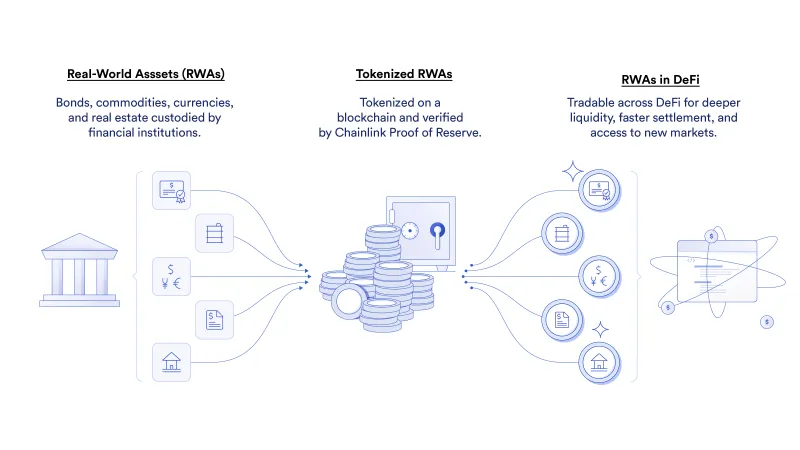
Photo: blockchain governance treasury management digital vault cryptocurrency, via assets-global.website-files.com
When a decentralized autonomous organization raises capital — whether through a token sale, a grant, or protocol revenue — that capital does not belong to the founding team. It belongs to the community. This distinction sounds philosophical until the moment a governance vote goes sideways, a smart contract exploit drains a multi-sig wallet, or a bear market cuts the treasury's dollar value in half overnight. At that point, the philosophical becomes deeply operational.
For Web3 founders building on protocols across the United States and beyond, treasury management is not a back-office function. It is a strategic discipline that sits at the intersection of finance, governance design, and community trust. Done well, it extends a project's runway and reinforces stakeholder confidence. Done poorly, it can unravel years of development in a single quarter.
This guide is designed as a working reference for founders who are either preparing to launch a DAO or are already managing one and looking to professionalize their approach.
Understanding What a DAO Treasury Actually Is
A DAO treasury is a pool of assets — typically held in a combination of the protocol's native token, stablecoins, and occasionally blue-chip assets like ETH or BTC — that is governed collectively by token holders. Unlike a corporate treasury managed by a CFO, a DAO treasury is subject to on-chain governance votes, which means every major allocation decision is public, contestable, and permanent.
This transparency is a feature, not a bug. But it also means that poor decisions are equally visible. When the Wonderland DAO scandal unfolded in early 2022, revealing that a convicted financial criminal had been managing the protocol's treasury, token holders watched the fallout in real time. The episode cost the project hundreds of millions in market capitalization and permanently damaged community trust.
The lesson: governance structure and personnel accountability matter as much as the investment strategy itself.
The Core Allocation Framework
Most mature DAOs organize their treasury into distinct buckets, each serving a different operational purpose. While the exact percentages will vary depending on the protocol's stage and goals, a broadly applicable framework includes the following categories:
Operational Runway (30–40%): This bucket covers core team salaries, infrastructure costs, legal fees, and any recurring service contracts. It should be held predominantly in stablecoins — USDC or USDT being the most common choices for US-based teams — to eliminate volatility risk against predictable expenses.
Ecosystem Development (20–30%): Grants, hackathon prizes, developer incentives, and partnership funding fall into this category. This is the capital that fuels community growth and third-party building on the protocol. Platforms like Gitcoin and Questbook have become common infrastructure for distributing these funds transparently.
Strategic Reserves (20–25%): This portion acts as a buffer against market downturns and unexpected expenses. It should be conservatively managed — think short-duration yield strategies on established DeFi platforms rather than speculative positions.
Diversification and Yield (10–15%): The most sophisticated DAOs deploy a portion of their treasury into yield-generating strategies or diversified assets to reduce concentration risk. The key word here is discipline: chasing high yields with core treasury capital has bankrupted more than one protocol.
Governance Frameworks That Actually Work
The most technically sound allocation strategy will fail without a governance structure that enables timely, accountable decision-making. Two common failure modes exist at opposite ends of the spectrum: governance paralysis, where nothing gets approved because quorum requirements are too high or voter apathy is rampant, and governance capture, where a small group of large token holders effectively controls all decisions.
Several frameworks have proven effective in practice:
Delegated Governance: Rather than requiring every token holder to vote on every proposal, delegated systems allow holders to assign their voting power to trusted delegates who are more engaged. Compound and Uniswap both use variations of this model. For founders, the practical benefit is faster decision cycles without sacrificing decentralization.
Tiered Spending Authority: Not every expenditure requires a full community vote. Many DAOs establish spending tiers where a core team or elected treasury committee can approve expenditures below a defined threshold — say, $50,000 — while larger allocations require broader governance participation. This balances operational agility with community oversight.
Time-Locked Execution: Approved proposals should be subject to a time-lock period before execution, typically 24 to 72 hours. This window allows the community to identify and respond to malicious or erroneous proposals before funds are moved. It is a simple safeguard that has prevented significant losses across multiple protocols.
Multi-Sig Architecture and Custody Considerations
On the technical side, most DAO treasuries are managed through multi-signature wallets — Gnosis Safe being the dominant standard in the US market. A well-designed multi-sig configuration requires a supermajority of keyholders to authorize any transaction, distributing the risk of a single point of compromise.
Founders should be deliberate about who holds keys. Keyholders should be geographically distributed, legally identifiable, and subject to a formal removal process if they become unresponsive or act in bad faith. Documenting this structure publicly adds an additional layer of community accountability.
For larger treasuries, some DAOs have begun working with institutional custodians or engaging legal wrappers — such as Wyoming DAO LLCs or Marshall Islands foundations — to provide an additional layer of legal protection and operational clarity, particularly as US regulatory scrutiny of the crypto sector intensifies.
Case Studies: Lessons From the Field
MakerDAO: One of the longest-running examples of functional DAO treasury management, MakerDAO has maintained operational discipline through multiple market cycles. Its decision to allocate a significant portion of its reserves into US Treasury bonds and other real-world assets was controversial but ultimately demonstrated a maturity of thinking that most DAOs have yet to achieve. The key takeaway: diversification beyond native crypto assets is not a betrayal of Web3 values — it is prudent stewardship.
Sushi DAO: By contrast, SushiSwap's treasury management has been marked by internal conflict, allegations of insider dealing, and a chronic inability to reach consensus on spending priorities. At various points, the protocol's operational runway has been dangerously short despite substantial treasury assets on paper. The lesson here is structural: without clear governance rules and defined accountability, even well-funded DAOs can become operationally dysfunctional.
Building Trust Through Transparency
Perhaps the most underrated element of effective treasury management is the practice of regular, proactive reporting. DAOs that publish monthly or quarterly treasury reports — detailing asset composition, recent expenditures, yield performance, and upcoming allocations — build the kind of institutional credibility that attracts serious contributors and investors.
Tools like DeepDAO, Dune Analytics, and Llama have made it easier than ever to create public dashboards that give stakeholders real-time visibility into treasury health. For US-based founders who are increasingly operating under the watchful eye of regulators and institutional partners, this level of transparency is not optional — it is a competitive advantage.
Final Thoughts
Managing community capital is one of the defining challenges of the Web3 era. The founders who approach it with the same rigor they apply to product development and token economics will be the ones who build lasting protocols. Those who treat the treasury as an afterthought will eventually face a community that agrees with that assessment — and votes accordingly.
At FounderBSC, we believe that sustainable Web3 projects are built on three pillars: strong code, intelligent capital allocation, and genuine community trust. The DAO treasury sits at the intersection of all three.